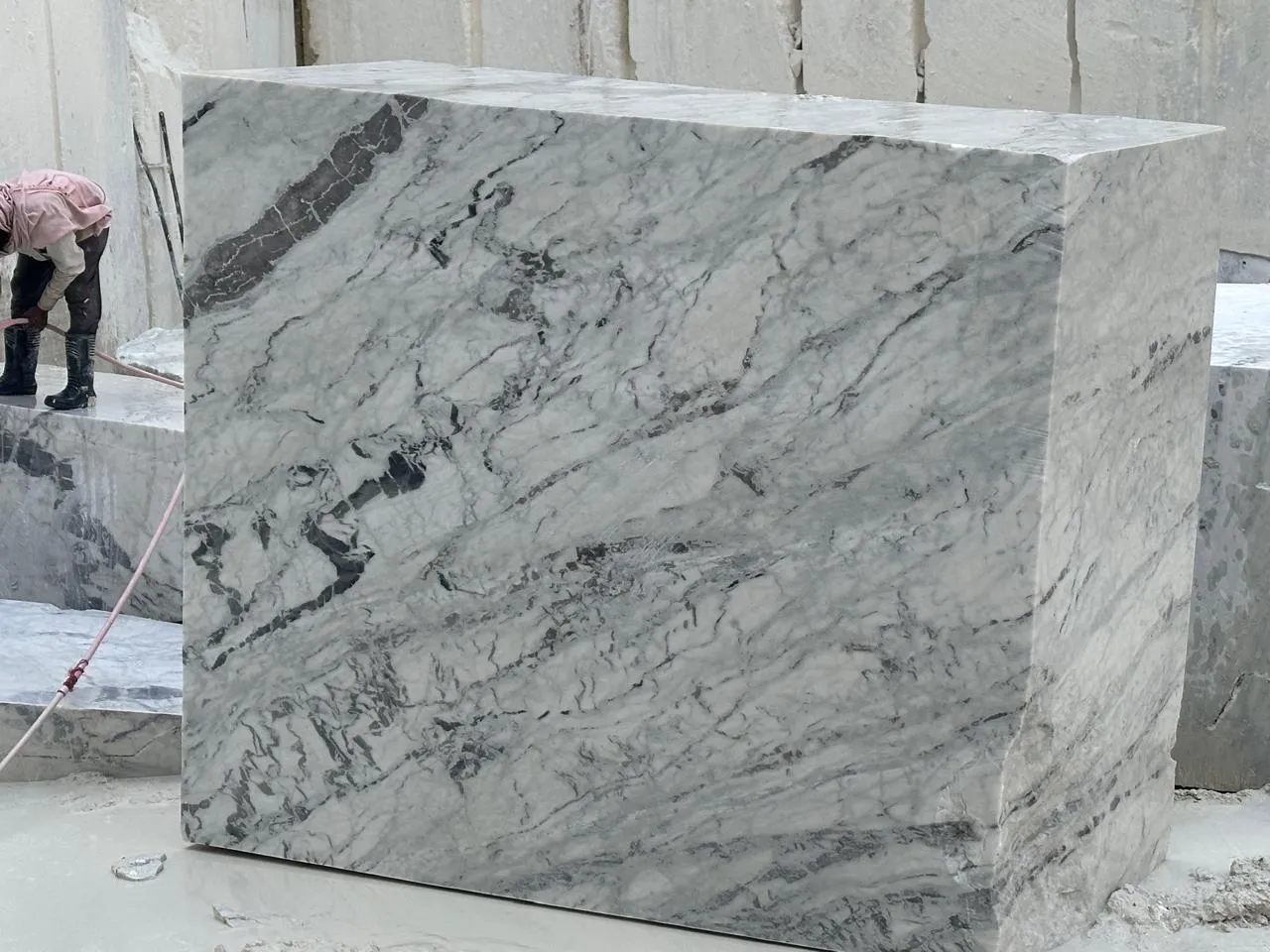
India is one of the world's largest exporters of natural marble, shipping blocks, slabs, tiles, and finished products to China, UAE, Saudi Arabia, the United States, and dozens of other markets. If you are an overseas buyer or importer looking to source Indian marble, this guide takes you through the full process — from quarry to your port — including the documentation, the logistics, and the questions that separate a reliable Indian supplier from a broker.
India's Position in the Global Marble Market
India ranks among the top five countries globally for marble production and export. The primary producing region is Rajasthan — particularly the districts of Rajsamand, Udaipur, and Nagaur — which accounts for the majority of India's white marble output. Tamil Nadu and Andhra Pradesh produce significant volumes of granite. Marble from the Rajsamand belt is characterised by high whiteness, fine crystalline structure, and the ability to take an exceptional polish, making it competitive with Italian marble at a fraction of the price.
India's two primary export products are raw marble blocks (quarried stone in its natural form) and processed marble (cut slabs, tiles, and finished products). China is the single largest buyer of Indian marble blocks, processing them domestically. UAE and Saudi Arabia import significant volumes of finished marble for construction. The diaspora market — Indian communities abroad commissioning temples and cultural buildings — is a growing export category.
The Export Process: Step by Step
Quarrying and block selection
The process begins at the mine. Marble is extracted using diamond wire saws and quarry machines to produce raw blocks — typically 2–4 cubic metres each. Blocks are graded for quality at the quarry site, checked for internal fractures (using hammer testing), and assigned a quality grade. Only blocks that pass visual and structural inspection are approved for export.
Factory processing (for slabs and tiles)
If the buyer has ordered processed marble rather than raw blocks, blocks are transported from the quarry to the processing factory. At the factory, gang saws cut the blocks into slabs (typically 18–20mm thick). Slabs then move to polishing lines for surface finishing. Finally, computer-controlled cutting machines cut slabs to the required tile dimensions.
Quality inspection and approval
Before packaging, a quality inspection is conducted — either by the supplier's team, a third-party inspector appointed by the buyer, or both. Inspection covers: dimensions and squareness, surface quality (no pitting, scratches, or edge chips), shade and lot consistency, and whiteness and finish matching the approved sample. Buyers are encouraged to send their own inspector to the factory, which is standard practice for large orders.
Packaging and loading
Marble tiles and slabs are packed in wooden crates with internal foam or polystyrene cushioning. Blocks are secured on wooden pallets and wrapped with timber battens for stability. The packing list is prepared, detailing the quantity, dimensions, gross weight, and net weight of each crate. Containers are loaded at the factory or at a nearby container freight station (CFS) and sealed for export.
Documentation and customs
This is the most paperwork-intensive stage. The exporter prepares all export documentation and files with Indian customs through the ICEGATE system. The shipping line issues the Bill of Lading once the container is loaded at the port. The full document set is couriered to the buyer or sent electronically, enabling clearance at the destination port.
Shipping from Indian ports
Most Indian marble exports depart from Mundra Port (Gujarat), Nhava Sheva / JNPT (Mumbai), or Pipavav (Gujarat). Rajsamand is approximately 250–350 km from these ports, making road transport the standard method. Transit times vary: 10–14 days to UAE, 14–21 days to China, 30–45 days to the United States or Europe.
Key Export Documents — What You Will Receive
As a buyer importing Indian marble, you will need the following documents for customs clearance in your country. A reliable supplier will provide all of these as standard:
Commercial Invoice
Details the buyer, seller, goods description, quantity, unit price, total value, and terms of sale (FOB/CIF). This is the primary document for customs valuation.
Packing List
Itemises each crate or bundle: dimensions, gross weight, net weight, quantity. Must reconcile with the Commercial Invoice and Bill of Lading.
Bill of Lading (or Airway Bill)
Issued by the shipping line. The original BL is the document of title — the buyer must present it to take delivery of goods at destination. Handle originals carefully.
Certificate of Origin
Issued by the Export Inspection Council or FIEO, certifying that the goods originate from India. Required for claiming preferential import duties under trade agreements (FTAs) where applicable.
Shipping Bill
The Indian customs export declaration, filed electronically via ICEGATE. Confirms the goods were legally exported from India and is required for GST refund claims.
Quality / Test Certificate
Optional but increasingly requested — certifies the stone's physical properties (water absorption, compressive strength, whiteness index) against relevant standards (IS, ASTM, EN). Available on request.
Blocks vs Slabs vs Tiles — What to Import?
The decision about which form to import depends on your end market and whether you have domestic processing capacity.
| Product form | Best for | Considerations |
|---|---|---|
| Raw blocks | Buyers with own processing factories (China market primarily) | Lowest per-tonne cost. Requires gang saw and polishing equipment at destination. Subject to quarry lot variability. |
| Sawn slabs (unpolished) | Buyers who want to finish locally but not cut from blocks | Mid-range cost. Requires polishing and cutting at destination. Consistent thickness already achieved. |
| Polished slabs | Fabricators, countertop manufacturers, architecture firms | Factory-finished to 600mm width or full slab. Can be cut to specification at destination. Most flexible format. |
| Cut-to-size tiles | Developers, contractors with no cutting facility | Ready for installation on arrival. Highest per-unit cost. Specify exact dimensions. Can be packed at higher density. |
| Custom-cut finished pieces | Temple projects, hospitality, heritage renovation | Highest value-add. Requires detailed drawings. Longer lead time. Includes treads, skirting, cladding panels. |
How to Find a Reliable Indian Marble Exporter
The Indian marble industry has thousands of suppliers, but the quality range is enormous. A large proportion of "exporters" are traders who buy from multiple factories and quarries — and who cannot guarantee quarry lot consistency or quality control beyond what the factory offers them. To protect yourself:
- Verify the supplier's IEC (Import Export Code). Every legal exporter in India has an IEC issued by DGFT. Ask for it and verify it on the DGFT portal. An exporter who cannot provide an IEC is either unlicensed or working through a third party.
- Ask if they own the quarry and the factory. A mine-to-factory supplier controls the full supply chain and can guarantee quarry lot consistency. A trader has no such control.
- Request a sample before placing an order. Any legitimate supplier will send samples. If a supplier refuses to send samples, or charges excessive amounts for them, that is a warning sign.
- Conduct a factory visit or appoint a third-party inspector. For orders above $10,000 USD, the cost of an independent inspection is a sound investment against receiving substandard goods.
- Insist on L/C (Letter of Credit) or T/T after inspection. Avoid paying 100% advance to a supplier you have not worked with before. Use a reputable payment structure: 30–40% advance against order, balance against shipping documents or B/L copy.
- Check references from previous export customers. Ask for the names of two or three previous international buyers and verify the supplier's track record.
About Vikas Marmo's export operations: We mine at our own quarries in Kelwa, Rajsamand and process in our in-house factory on-site. We have been exporting since the 1990s to China, UAE, and Saudi Arabia. We can provide IEC documentation, quarry certificates, and third-party inspection facilitation as standard. Contact us for an export quotation.
Incoterms — Understanding the Price You Are Quoted
When an Indian marble exporter quotes you a price, the Incoterm attached to the quote determines exactly what that price includes. The most common terms in the marble export trade are:
- Ex-Works (EXW): You collect from the factory. All freight, insurance, and customs charges are your responsibility. Lowest quoted price, highest buyer responsibility.
- FOB (Free on Board): Supplier is responsible until the goods are loaded on the ship at the Indian port. You pay ocean freight and insurance from there. Common for experienced importers.
- CIF (Cost, Insurance, Freight): Supplier includes ocean freight and insurance to your destination port. You pay import duties and inland delivery from there. Common for buyers new to importing from India.
- DAP (Delivered at Place): Supplier delivers to a named destination — your warehouse or project site. You only pay import duties. Highest quoted price, lowest buyer responsibility.
For first-time importers, CIF is the recommended starting point — it simplifies your cost calculation and puts the logistics management in the hands of the exporter who knows the Indian ports and shipping lines.
Ready to Import Indian Marble?
We export blocks, slabs, and tiles to China, UAE, Saudi Arabia, and further. Send us your specifications — quantity, product form, dimensions — and we will prepare a detailed export quotation within 48 hours.
Request an Export Quote ›